Wednesday, October 9, 2013

Twelve: Doubting Thomas

Water-Dreamers
Kerang Floods 2011


The following account of a big tribal fight, although believed by many, was never regarded as authentic by the late Mr Peter MacPherson, one of the best-informed and most reliable authorities on Donald's early history.

The story is that in 1854 the most terrible tribal fight recorded in this district was held on the banks of the Richardson River on the site now owned and used by Mr W.H. Gray for grazing purposes. One evening three Donald blacks were hunting emus along the banks of the river, when they saw a tribe of Avoca blacks making camp further up the river. They at once warned their companions and got ready for battle.  That night when their enemies had retired for the night and had their fires out, they attacked them, killing 500 out of 501.  The slaughtered blacks were buried where they were killed.


Mimi Spirit Hunting Ngurrudu (Emus)” 


Regularly, once a year, five or six hundred black met on the banks of the Richardson, on the site now used for a football ground, to hold a corroboree.  One of the blacks, "Johnny" was more civilized than the rest. Whenever he heard that any of his tribe were going to harm the white people, we would go "on the quiet" and tell Mr Donald. For that reason Mr Donald presented him and his lubra with a brass plate and titled them "King Johnny" and "Queen Mary".


The brass plate afterwards descended to another black called Big Bob, or Murdering Bob, as he was called, because he was so treacherous. He was the biggest black in his tribe and the most savage. One night he went into a hut and killed an old shepherd. Most of the huts in those days had holes all round the walls because the blacks would sometimes set fire to them by throwing fire-sticks on the roof.


Hoary Sunray

If the hut-keepers felt at all suspicious they would fire a shot out of one of the holes several times during the night to scare the blacks away. King Anthony was the next "king". He was also very treacherous, and killed another black named Davie, and three lubras. He died a few years ago. As the ground was taken up by white people, the blacks became more civilized, and learned to work on the different stations.


Cypress
Guadalupe River, Texas


The St Arnaud "Mercury" of March 1875, states:~
 
John I, King of Banyenong, visited St Arnaud, armed with two boomerangs and half a dozen spears. He walked down Napier Street shaking hands with everyone who accosted him. He claimed all
the young men as countrymen, and was particularly anxious to know if they had a "bob" in their pockets.


Extract from The Donald Times 1875-1925
Complete History of the Past Fifty Years.........Maybe


Tuesday, October 8, 2013

Twelve: Simon Says


Fair is foul and foul is fair


But the spirit of the depths said:

“No one can or should halt sacrifice. Sacrifice is not destruction, sacrifice is the foundation stone of what is to come … You should carry the monastery in yourself . The desert is within you. The desert calls you and draws you back … Truly; I prepare you for solitude.”


After this, my humanity remained silent. Something happened to my spirit, however, which I must call mercy.


There is only one way and that is your way. You seek the path, I warn you away from my own. It could also be the wrong way for you.


One eye of the Godhead is blind, one ear of the Godhead is deaf,
the order of its being is crossed by chaos.

 
The Red Book: Liber Primus


images credit

Monday, October 7, 2013

Sunday, October 6, 2013

Twelve: Andrew


Sun arise, She bring in the morning.
Sun arise, bring in the morning, fluttering her skirts all around.
Sun arise, She come with the dawning.
Sun arise, come with the dawning, spreading all the light all around.

Sun arise, on the kangaroo paw.
Sun arise, on the kangaroo paw, glistening the dew all around.

Sun arise, filling all the hollows,
Sun arise, filling all the hollows, lighting up the hills all around.

Sun arise, come with the dawning,
Sun arise, She come every day.
Sun arise, bring in the morning,
Sun arise, every, every, every, every, day.
She drive away the darkness, every day,
Drive away the darkness,
Bringing back the warmth to the ground.

Sun arise, oh, oh,
Sun arise, oh, oh,
Spreading all the light all around.

Sun arise, bring in the morning.
Sun arise, bring in the morning, spreading all the light all around.

Sun Arise
lyrics  by Rolf Harris & Harry Butler 

Saturday, October 5, 2013

Twelve: Matthew

The Look


The heron's the look of the river.
The moon's the look of the night.
The sky's the look of forever.
Snow is the look of white.
 

The bees are the look of the honey.
The wasp is the look of pain.
The clown is the look of funny.
Puddles are the look of rain.
 

The whale is the look of the ocean.
The grave is the look of the dead.
The wheel is the look of motion.
Blood is the look of red.
 

The rose is the look of the garden.
The girl is the look of the school.
The snake is the look of the Gorgon.
Ice is the look of cool.
 

The clouds are the look of the weather.
The hand is the look of the glove.
The bird is the look of the feather.
You are the look of love.
 

Twelve: Judas


One voice for ten dragged this way once
by superstition, ignorance.
Thou shalt not suffer a witch to live.

Witch: female, cunning, manless, old,
daughter of such, of evil faith;
in the murk of Pendle Hill, a crone.

Heavy storm-clouds here, ill-will brewed,
over fields, fells, farms, blighted woods.
On the wind’s breath, curse of crow and rook.


Thursday, October 3, 2013

Twelve: Jude Thaddeus


Baby Jude was given the name “Jude Thaddeus” The name “Jude” means “giver of joy”.  The name “Thaddeus” means “the great-hearted one.”  After his call by Christ, and along with the other Twelve Apostles, Jude Thaddeus would live in Christ's presence, share in His work, and carry His Gospel to distant and unknown.      

Family trees, which is to say ancestral records, play a prominent role in the life of Hebrew families. This has been true for thousands of years.  Hebrews keep accurate genealogical records.  And so the young Jude Thaddeus would have learned about his ancestors, but also about his contemporaries who were family members.  Of course this would include the fact that his own mother, Mary, was the blood sister of the Blessed Virgin Mary, the Mother of Jesus.  This would mean that he, and his brother James, were both first cousins of Jesus Christ.  


Charbel Makhlouf was born on 8th May, 1828, in the small village of Biqa-Kafra in the high mountains of Northern Lebanon. His parents were poor but religious, and their fifth child was attracted at an early age to prayer and solitude.


If you are having emotional troubles,
please see a mental health professional,
not a computer

Wednesday, October 2, 2013

Twelve: Bartholomew

The Franciscan tertiary Angela of Foligno (ca. 1248-1309) reports that a demon tempted her with pride and desolation, falsely claiming to be the apostle Bartholomew and that it was his feast day.


Woman’, for radical French feminist, Luce Irigaray, is a concept different from but similar to women as we know them. Woman is always outside the male structure of society, and, since this male-dominated society dictates or attempts to dictate people’s understanding of the universe and their place in it, a woman’s voice, truly expressed, is necessarily foreign and shocking. Irigaray quotes Angela of Foligno at the beginning of a chapter on female mystics. There is something true about ultimate reality Irigaray feels women like Angela (and a few men, like John of the Cross) can reveal to us.


In that chapter, Irigaray writes about the Real, the essence of our existence as divided against ourself. For each of us, she says, there exists “a gulf that opens up ahead, moves away, strains, never knowing or imagining (itself) in its unfathomable nakedness.” (Irigaray, 194)


Mystics like Angela, Irigaray seems to say, were proclaiming the terror that lies at the heart of an unjust society. Most people continue to fail to understand this message. From the perspective of society as a whole, the tendency is to look at people who, for instance, pray for God to kill their children or who sit at the door of a church during a service, screeching uncontrollably, and call them insane.

Extract source
We Dress Like Students, We Dress Like Housewives


Hampl, Patricia: Virgin Time: In Search of the Contemplative Life Ballantine Books, 1992

Irigaray, Luce. The Speculum of the Other Woman. G.C. Gill, translator. Cornell University Press, 1985.

Tuesday, October 1, 2013

Twelve: Beth Tsaida, the House of Fishing

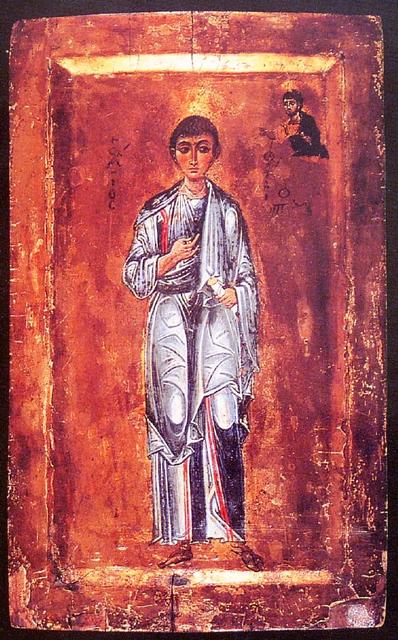
The next day Jesus decided to go to Galilee. And he found Philip and said to him, "Follow me." Now Philip was from Bethsaida, the city of Andrew and Peter. Philip found Nathanael, and said to him, "We have found him of whom Moses in the law and also the prophets wrote, Jesus of Nazareth, the son of Joseph." Nathanael said to him, "Can anything good come out of Nazareth?"  
Philip said to him, "Come and see."


Philip:
 a man gifted for asking
questions everyone else is afraid to ask.


We have created a culture (and birth culture) that seeks to avoid and minimise extreme emotion and pain, and encourages being in control. We use medications and/or skills, methods and techniques to remain in control and dampen the emotions – or at least the expression of those emotions. In some cases women are told that they should not experience fear, or pain, during birth… that these are conditioned feelings that can be controlled. I think it is a shame that this powerful aspect of the birth experience remains hidden and suppressed. Birth movies rarely include footage of women visibly ‘losing control’ (are these scenes edited out?). Women rarely share with others their experiences of feeling fearful and out of control – possibly they are worried about being judged, or think that they are unusual.


I realise that my perspective/suggestions go against many childbirth preparation programs which aim to give women skills and techniques to control their fear (and behaviour). Whilst these techniques can be helpful… particularly during early labour… they are unhelpful for some… particularly during the intense transitional phase of labour. Women have told me they felt like failures because the techniques stopped working for them and they ‘lost it’. One woman recently told me that the practitioner who taught her various techniques informed her she had not done them properly because she felt pain and fear! In addition, suggesting that the baby suffers long-term emotional issues if fear is experienced during labour is unhelpful (seriously, women are told this).


Cosmatesque floor
Basilica di San Giovanni Lateran


An alternative approach is to open up the discussion about fear and losing control during birth.  Rather than trying to eliminate fear, it seems more helpful to acknowledge it is part of birth (for most) and to embrace it. Some suggestions:


During pregnancy
  • Explore fear – What are you afraid of? Is there anything you can do to help alleviate specific fears (eg. researching, talking, planning)?

  • Reinforce that it is OK if fear surfaces during birth… even if you think you have ‘worked through’ a specific fear during pregnancy it may resurface.

  • If you want to, learn relaxation/coping techniques – these may help, particularly in early labour – but don’t rely on them to work throughout (they might if you are lucky). Also don’t be persuaded that you need to master particular skills to birth well… you already have everything you need within you.

  • Create/plan a safe birth environment where losing control and feeling fear will be OK. Anyone who you plan to have in your birth space should be able to ‘be with’ your fear, and support you through it. You should feel comfortable about losing it in front of them without being judged.
Rachel Reed, Australian midwife.

Sourced from
Fear the Fear and Birth Anyway
Midwife Thinking


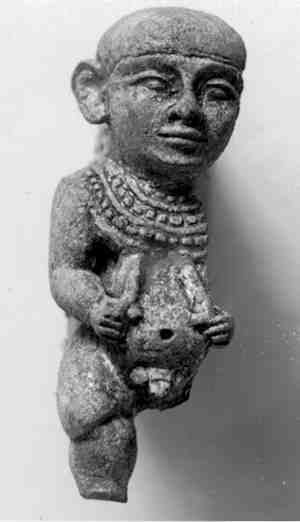
Pataekos
image sourced from


Originally published 10/1/13 8.16 AM